Cat Enrichment on a Budget: 12 DIY Ideas That Actually Work
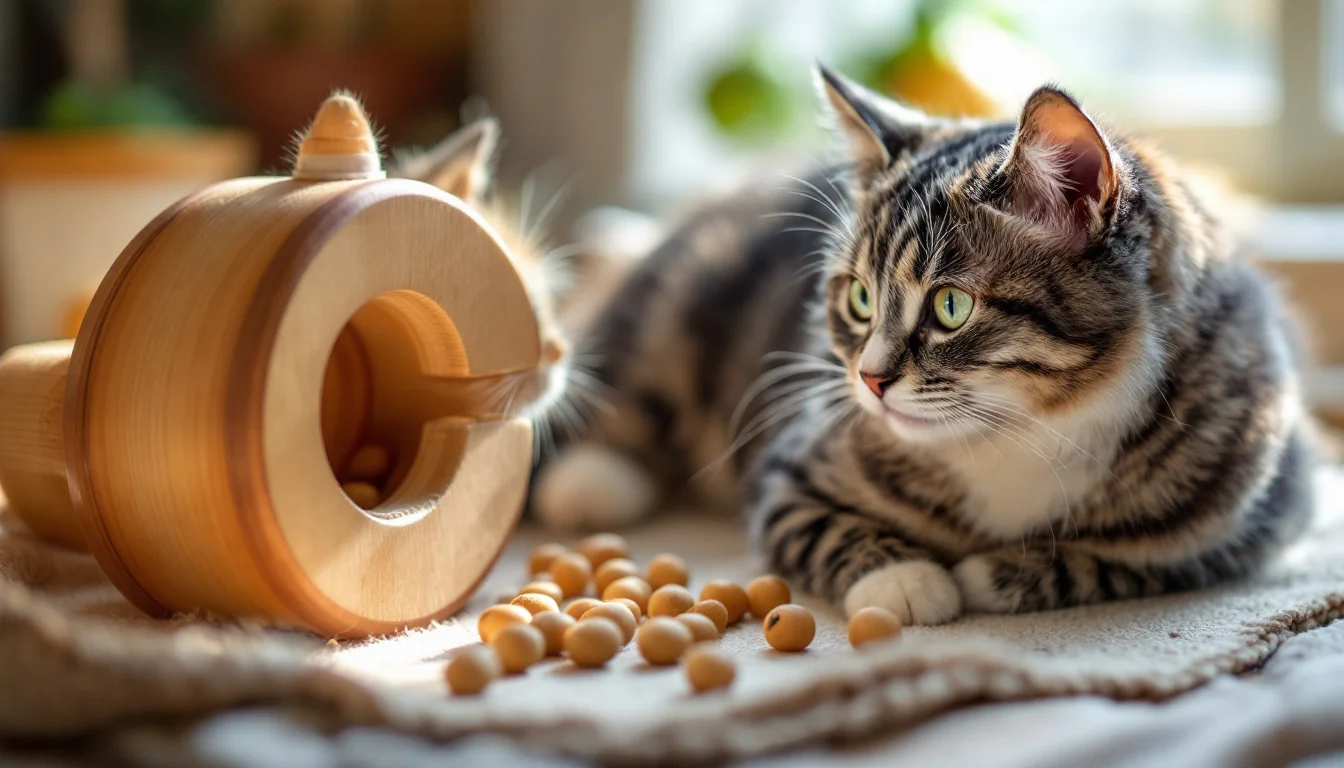
Pet store aisles are lined with expensive, battery-operated gadgets that promise entertainment for indoor felines. Yet, most owners have experienced the distinct frustration of watching their cat ignore a pricey electronic device in favor of the plain cardboard shipping box it arrived in. This preference is not a feline quirk; it is a strong biological imperative.
According to the ASPCA's Feline DIY Enrichment guide, enrichment is essential for cats and kittens of all ages, and keeping a cat's environment as exciting and stimulating as possible promotes a happy and healthy life. True behavioral fulfillment does not correlate with how much money is spent at the pet store.
Instead, effective budget enrichment relies on leveraging a cat's evolutionary biology. By repurposing household items—often things destined for the recycling bin—owners can accurately simulate the natural hunt-catch-kill-eat cycle. These DIY setups target the same predatory sequence commercial toys aim for, and because they vary in texture, sound, and reward, many cats engage with them longer—though no head-to-head studies compare DIY and store-bought toys directly.
Key Takeaways
- Foraging Fun: DIY food puzzles turn regular meals into stimulating foraging sessions.
- Sensory Play: Everyday items like cardboard and paper bags simulate prey texture and sounds.
- Active Supervision: Homemade physical toys require active supervision to prevent accidental ingestion.
- Toy Rotation: Storing porous DIY toys in an airtight container with catnip refreshes their scent.
- Beyond Objects: Visual and olfactory enrichment (e.g., wildlife videos or cat-safe grass) provides safe engagement.
Why Do Cats Prefer Free Boxes to Expensive Toys?
Domestic cats are not apex predators; they are highly skilled mesopredators that retain strong hunting instincts. They happen to operate within the confined territories of our living rooms. Their predatory drive remains fully intact regardless of how securely they are housed or how much commercial food they consume.
According to Chumka's Corner (10 Simple Indoor Cat Enrichment Hacks), citing predation research, free-roaming cats kill an estimated 1.3 to 4.0 billion birds and 6.3 to 22.3 billion mammals annually in the USA alone. This notable statistic provides vital context: cats possess a massive, hardwired predatory drive that must be safely redirected indoors to prevent destructive behaviors or deep-seated anxiety.
Commercial toys often fail because they do not adapt to the instinctual sequence of hunting. Household waste, however, can be stalked, manipulated, and torn. To illustrate why these zero-cost items work so effectively, we can map them to the underlying instincts they satisfy:
| DIY Household Item | Biological Instinct Satisfied | Behavioral Action Simulated |
|---|---|---|
| Treat-Dispensing Tube Toy | Foraging and extracting | Prying small prey from burrows |
| Sock Crinkle Toy | Tactile stimulation | Delivering a "killing bite" to a mammal |
| Wildlife/Bird TV | Visual stalking | Assessing prey movement from a distance |
Understanding these underlying mechanics ensures that DIY setups are viewed as biologically sound enrichment tools.
How Do You Turn Mealtime Into a Hunt?
The ASPCA notes that making mealtime fun, challenging, and interactive for domestic cats is a great way to satisfy their innate instincts and curiosities. By doing so, every single meal is transformed into an opportunity for behavioral enrichment.
1. The Shoebox Roll Puzzle Feeder
This engaging puzzle simulates extracting prey from tight crevices. It requires 3 to 4 empty toilet paper rolls, a shoe box with a lid (or a soft drink box), a pen or pencil, and a knife. The ASPCA outlines the following assembly steps:- Trace the end of the toilet paper rolls on top of the box lid in various different locations.
- Cut the holes along the traced lines. Ensure accuracy, as a hole that is too big will leave the roll unstable.
- Slide the toilet paper rolls tightly into the newly cut holes.
- Place dry kibble or high-value treats into each roll and give it to the cat to solve.
2. Treat-Dispensing Tube Toy
For a faster option, a DIY treat-dispensing tube toy requires only a toilet paper or paper towel roll and a sharp knife or scissors. To construct it, cut holes on the side of the tube just large enough for kibble or treats to pass through. Place the kibble inside, heavily tape or fold the ends shut, and give it to the cat so they can bat the tube to release their food.3. Scatter Feeding and Hiding
Best Friends Animal Society (Best Indoor Cat Enrichment Ideas) suggests that one of the absolute easiest DIY food puzzle options is to "scatter feed." This zero-cost technique involves simply tossing the cat's kibble directly on the floor and letting them eat up all the pieces. To provide more of a sensory challenge, owners can hide small piles of kibble around the house, forcing the cat to use their nose to search for their meal.4. The Muffin Tin Puzzle
Repurposing kitchenware is another highly effective strategy. Lola The Rescued Cat's guide to budget-friendly enrichment ideas (2020) lists a standard muffin tin food puzzle as an excellent option. Placing small portions of food in the bottom of each cup forces the cat to rely on paw dexterity to scoop out their meal.What Household Items Make Good Sensory Toys?
When feline predators hunt, they rely heavily on auditory and tactile feedback—such as the rustle of dry leaves or the distinct texture of feathers. Everyday household items perfectly replicate these specific sensory inputs.
5. Cardboard Boxes
According to Best Friends Animal Society, simple and cheap self-play toy options include cardboard boxes.6. Paper Bags
When offering large paper bags, the handles must be removed entirely for safety to prevent the cat from getting stuck or strangled.7. Crumpled Paper
Crumpled paper perfectly mimics the high-frequency sounds of scurrying prey when a cat bats it across a hard floor. Other inexpensive object options cited include catnip-filled toys, plastic springs, and wall- or door-mounted toys.8. DIY Shakers
Auditory stimulation frequently triggers a cat's instinctual pounce reflex. Lola The Rescued Cat (2020) notes that a shaker toy can easily be made out of an empty toilet paper roll.9. Crinkle Toys
Similarly, a crinkle toy can be made from a clean sock stuffed with paper or safe, noisy materials. Both items are cited as exceptionally cheap or completely free DIY enrichment solutions that provide both satisfying textures and sound feedback.Beyond Objects: Visual, Olfactory, and Environmental Stimulation
Feline biology requires stimulation that extends beyond physical hunting objects to include visual tracking, olfactory exploration, and vertical or spatial changes within their defined territory.
10. Digital Visual Stalking
For visual stimulation, Lola The Rescued Cat (2020) states that searching for "bird videos for cats," "wildlife videos for cats," and "squirrel videos for cats" gives cats hours of TV fun. The author notes that leaving these videos on in the living room during the day while working in another room safely engages the cat's visual tracking instincts without requiring constant active human participation.11. Olfactory and Digestive Greens
Chumka's Corner highlights that growing kitty grass can both help keep a cat away from the owner's houseplants and provide the cat with vital enrichment. There are a number of cat-friendly greens, such as wheatgrass or oat grass, that can easily and affordably be grown from seeds indoors, providing safe olfactory and digestive stimulation.12. Safe Outdoor Access
Expanding a cat's physical territory is one of the most effective forms of environmental enrichment. Chumka's Corner points out that people with outdoor space can build or buy a catio, ranging from a simple enclosure to almost a separate house for the felines. For renters with limited space, a balcony can be turned into a catio, with several ideas, such as tension-pole balcony enclosures, being completely renter-friendly and temporary.The "Catnip Marinade": A Zero-Cost Toy Rotation Strategy
A frequent issue with self-play toys, whether expensive store-bought items or DIY household creations, is rapid feline habituation. A cat will eventually stop stalking an object that becomes entirely predictable and never changes its scent profile.
To counter this fatigue without acquiring new items, owners can utilize a catnip-marinade strategy. According to Best Friends Animal Society, when a cat becomes bored with self-play toys, they should be stored away in an airtight container with some catnip and rotated back in at a later date. This mechanism functions through an olfactory reset. By resting a porous cardboard tube or fabric sock in an airtight environment with dried catnip, the toy absorbs the novel volatile oils. When it is finally reintroduced to the living room, the item registers to the cat's sensory receptors as an entirely new, high-value target.
FAQ: Safety and Supervision for DIY Cat Enrichment
Do I need to watch my cat when they use homemade puzzles?
Yes. According to the ASPCA, owners must always closely and actively supervise their cat(s) while DIY items are accessible.What should I do if my cat tears pieces off a cardboard tube?
While destroying paper or cardboard simulates the physical act of tearing prey, consumption is dangerous. The ASPCA warns that if a cat attempts to ingest an item, it should be removed immediately from their mouth to prevent choking or gastrointestinal blockages.Can DIY cardboard and paper items be left out while I am at work?
No. Because these materials can quickly degrade or be chewed into ingestible pieces, they require active supervision. When you cannot be present to monitor the cat, it is safer to rely on non-physical enrichment that is safe unsupervised, such as leaving wildlife television videos playing, using a timed feeder, or providing a window perch.Conclusion
The owner is one of the most dynamic and unpredictable enrichment tools in any household. While tubes, boxes, and foraging puzzles excellently simulate the solitary aspects of the hunt, they cannot fully replace the erratic, responsive movements that occur during interactive human play. Integrating these budget-friendly DIY strategies builds a deeper framework of trust between species, demonstrating that supporting a cat's psychological well-being relies on creative biological engagement rather than sheer financial expenditure.