Guinea Pig Housing in 2026: Why Vertical Cages Fail and What Welfare Standards Demand
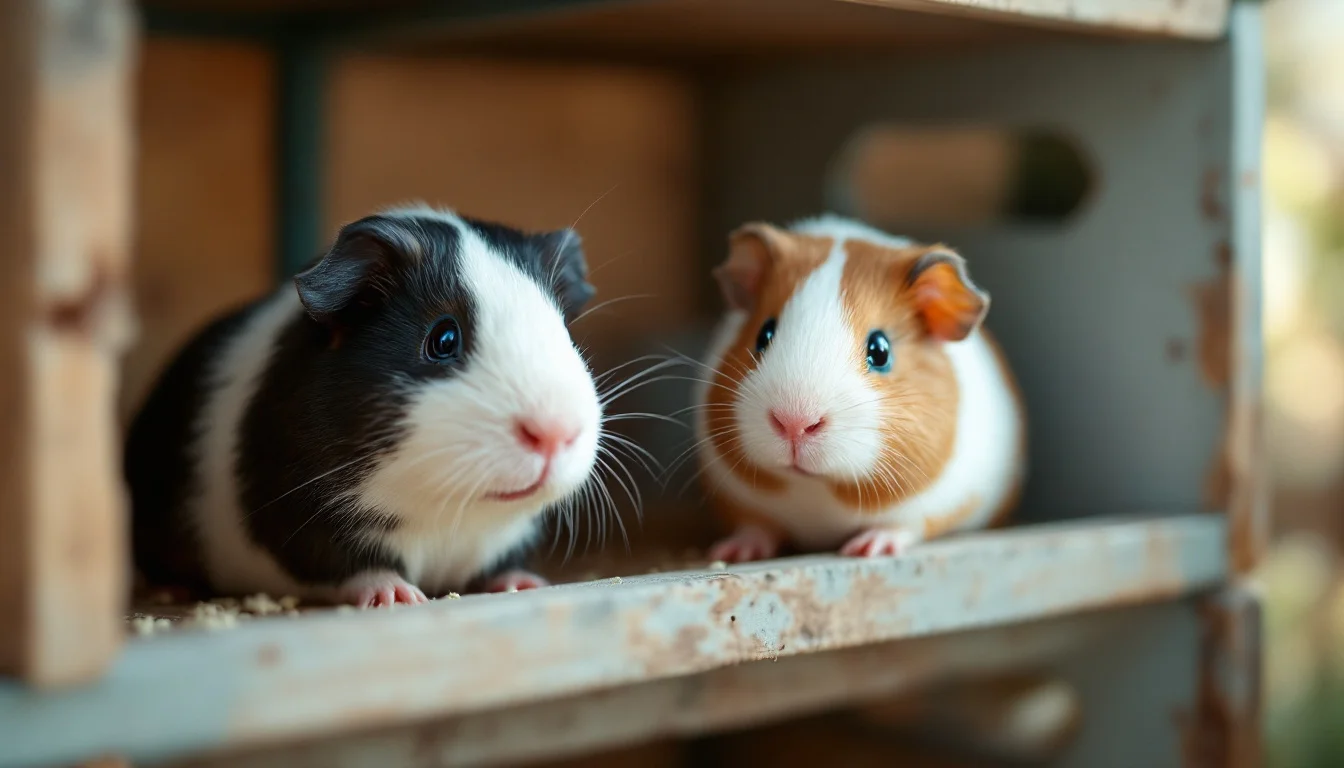
When evaluating modern animal welfare standards, a stark disconnect remains between commercial retail offerings and biological realities. Most cages marketed for guinea pigs are too small to support their physical health and behavioral needs. Consumers frequently walk into pet supply stores and purchase habitats that are inadequate, misled as they are by packaging that prioritizes retail shelf space over animal husbandry.
To thrive, guinea pigs need appropriate room to roam within their primary enclosure. According to Humane World's "Guinea Pig Housing Requirements" guidance (accessed 2026), this expansive footprint is mandatory because these animals require separate, distinct spaces for a nest, a bathroom area, and their food and water stations. Cramping these functional zones together into a single tight corner leads to immediate sanitary failures.
Addressing this gap requires moving beyond outdated pet-store standards. Housing a guinea pig correctly in 2026 means rejecting cramped, multi-level designs and embracing expansive, single-level environments that respect their physiological limitations and complex social dynamics.
Key Takeaways
For a rapid overview of modern housing standards, adhere to these structural baselines:
- Single-level living is mandatory: Enclosures must prioritize horizontal floor space over vertical tiers, as guinea pigs lack the anatomy to climb safely.
- Boar pairings require scale: Two male guinea pigs need at least 10 square feet as an absolute minimum, with 12 square feet recommended to prevent territorial aggression.
- C&C cages are widely recommended: Rescue organizations favor them for their ventilation, necessary floor space, and safe solid bottoms.
- Apply the N+1 hideout rule: Always provide one more refuge area than the total number of animals in the cage to ensure unhindered retreats.
Are Multi-Level Cages Bad for Guinea Pigs?
The Floor Space Calculation
Promotion of tall, multi-tiered hutches is a persistent hazard in consumer pet care. Retailers often market these structures as space-saving solutions, but they fundamentally misunderstand the species' anatomy. As outlined in The Guinea Pig Forum's "Cage Advice" resource (accessed 2026), guinea pigs are not natural climbers and inherently prefer single-level living.
This biological limitation mandates what we will call the Usable Space Calculation. To understand why commercial multi-level hutches fail, one must evaluate how space is utilized by a non-climbing animal. If a consumer purchases a two-story wooden hutch featuring 4 square feet of floor space on the bottom tier, the effective living area remains strictly 4 square feet. Because only the bottom level of a hutch counts towards a guinea pig's living space, the setup offers zero compliance with the 7.5-square-foot absolute minimum baseline. An upper level is acceptable only as bonus space—and may not even be used by the animals—never as a substitute for mandatory ground-level roaming area.
The True Purpose of Verticality
While vertical tiers do not contribute to the usable floor plan, height remains an important metric for an entirely different reason: physical exercise and biological behaviors.
According to the RSPCA's "Guinea Pigs Environment" documentation (accessed 2026), guinea pig accommodation must be large enough for them to exercise and high enough for them to stand up fully on their back legs. This vertical clearance is particularly critical. Guinea pigs of all ages perform "popcorning"—a frisky hop play behavior that indicates excitement and well-being. Therefore, the enclosure's ceiling must be high enough to prevent injury during these bursts of energy, even though elevated platforms remain useless for core spatial requirements.
How Much Space Do Two Male Guinea Pigs Need?
The Baseline Requirement
Establishing the exact dimensions of an enclosure begins with understanding the absolute minimums required for a solitary animal, before factoring in the necessary additions for social pairs. Based on the spatial guidelines in Humane World's "Guinea Pig Housing Requirements," for one guinea pig, 7.5 square feet (about 30-by-36 inches) is cited as a bare minimum recommended floor space, though guidelines from other recognized organizations vary.
Even at this baseline, animal welfare advocates stress that bigger is always better. A 30-by-36-inch footprint is merely the starting line for survival, not the optimal target for a thriving environment. It provides just enough room to establish the distinct nesting, bathroom, and feeding zones required by the species. It is also worth noting that Humane World's guidelines give 7.5 square feet as the minimum even for two guinea pigs, preferring at least 10.5 square feet (30 by 50 inches) for a pair—reflecting a higher threshold than the per-animal baseline alone would suggest.
Scaling for Territorial Males
The spatial requirements shift dramatically when housing pairs, particularly males. To navigate this, we can apply what we will outline here as the Boar Behavioral Space Matrix. This framework synthesizes baseline space minimums with the specific gender-dynamic requirements of male pairings, demonstrating how housing must scale to prevent territorial aggression.
According to The Guinea Pig Forum's "Cage Advice," housing two boars (male guinea pigs) introduces high risks of territorial conflict if space is restricted. The matrix dictates the following parameters:
- The Absolute Boar Minimum: The strict minimum for two boys is 150x60cm, which equates to 10 square feet of single-level space.
- The Recommended Boar Standard: The fully recommended cage size for two boars is 180x60cm, or 12 square feet.
The Rise of C&C Cages and the Danger of Wire Floors
Structural Advantages of C&C
To meet the expansive measurements demanded by behavioral science, owners must generally look outside traditional pet store inventory. Many guinea pig rescue organizations now strongly recommend "C&C" cages, which are constructed from metal storage cubes and a base of coroplast (corrugated plastic sheet), as detailed in Humane World's "Guinea Pig Housing Requirements" construction notes.
These modular setups allow grid panels to be added or removed to build custom dimensions without buying a new cage, easily achieving the male-pair space recommendation set out above. Beyond size, a C&C enclosure guarantees good ventilation, which is critical for respiratory health. The smooth coroplast base is exceptionally easy to clean and disinfect, and provides a surface that is fundamentally gentle on a guinea pig's delicate feet.
The Hazard of Mesh Flooring
Contrast this with the structural failures of commercial alternatives. The RSPCA's "Guinea Pigs Environment" guidelines caution that guinea pig housing must feature a solid floor with a good depth of litter. Grid or mesh floors are strictly not advised.
When housed on wire bottoms, litter simply falls through the gaps, removing any protective cushioning. Without this substrate layer, the exposed mesh creates severe pressure points that can hurt the animals' feet, and can contribute to painful conditions such as bumblefoot (a bacterial infection of the foot pad). Humane World similarly lists cages with wire floors as unacceptable guinea pig housing.
The Counterintuitive Cleaning Benefit
Consumers often resist large C&C cages under the assumption that a massive footprint requires exhausting maintenance. The reality is exactly the opposite. The RSPCA notes that proper maintenance requires a deep clean of guinea pig accommodation at least once a week, plus daily spot cleaning. As Humane World's maintenance guidance notes, larger enclosures are actually easier to keep clean to this standard. The vast floor space prevents concentrated waste build-up and gives the animals the necessary square footage to naturally separate their bathroom area from their other activities, isolating the mess to specific, manageable zones.
Comparing Enclosure Types: What to Buy and What to Avoid
Selecting the right habitat requires evaluating commercial options against strict biological criteria. The following breakdown categorizes common setups based on their ability to deliver functional room and prevent physical injury.
| Enclosure Type | Usable Space Efficiency | Foot Safety | Recommended Status |
|---|---|---|---|
| C&C Cages (Cubes & Coroplast) | High (Easily expandable horizontal footprint) | Safe (Solid corrugated plastic base) | Highly Recommended |
| Multi-Level Wooden Hutches | Low (Upper tiers do not count toward living space) | Variable (Depends on wood treatment and litter depth) | Not Advised for Primary Space |
| Commercial Wire-Bottom Cages | Low (Generally fail minimum footprint rules) | Unsafe (Causes injuries as litter falls through) | Strongly Avoid |
By comparing these models, it becomes evident that modular C&C builds are the most reliable off-the-shelf path for achieving the spatial and safety metrics required for optimal husbandry, though any single-level enclosure reaching that footprint with a solid bottom and good ventilation meets the same standard. However, it is important to note that C&C setups require DIY assembly and a reliable source for coroplast. For owners in small apartments, accommodating this expansive footprint can also pose significant space challenges.
Climate Control: Why Outdoor Hutches Belong in the Past
Strict Temperature Parameters
Historically, keeping these animals in garden enclosures was standard practice. Today, precise climate data dictates that outdoor environments carry significant risks due to extreme temperature sensitivity.
The RSPCA's "Guinea Pigs Environment" documentation establishes important thermal boundaries. Warm temperatures in the mid-20s Celsius can cause heatstroke in guinea pigs. Conversely, organizations advise moving guinea pigs indoors when temperatures drop significantly, as they can become dangerously chilled. Because outdoor climates can routinely breach both the cold weather floor and the warm weather ceiling, housing setups must be located in climate-controlled interior spaces wherever possible to prevent sudden, potentially fatal exposure to the elements. The RSPCA does allow for outdoor housing provided the hutch is sheltered from direct sun and wind and animals are brought in when temperatures drop, so the case for outdoor housing is contested rather than categorically closed.
The Social Cost of Outdoor Housing
Beyond the physical danger of volatile weather, outdoor housing inflicts severe psychological deprivation. Humane World's behavioral guidelines note that while an outdoor hutch was once considered acceptable housing, keeping a pet outside can limit their regular interaction with the family.
Guinea pigs are highly social animals that thrive on the ambient activity, sounds, and daily handling provided by an indoor domestic environment. Isolation in a backyard hutch drastically limits this essential enrichment. While access to natural grass is beneficial, outdoor exercise should remain strictly supervised, provided only in short periods, and solely conducted in good weather. The primary residence is best kept indoors, integrated into the household.
Interior Architecture: Bedding and the N+1 Hideout Rule
Implementing the N+1 Rule
The physical structure of the cage is only the outer shell; the interior setup demands just as much precision to maintain herd harmony. To prevent bullying and stress, the RSPCA's "Guinea Pigs Environment" protocols mandate a specific mathematical approach to shelters: refuge and hide areas in guinea pig housing should always exceed the number of animals by one.
This ensures that every single animal can retreat and hide simultaneously, without fighting over a limited resource. If a cage houses two boars, the owner must provide at least three distinct hideouts. This N+1 ratio eliminates the ability of a dominant animal to guard all the shelters, guaranteeing a safe zone for the subordinate mate.
Selecting Safe Substrates
Flooring material carries its own set of strict rules. According to Humane World's bedding guidelines, traditional cedar and untreated pine shavings are explicitly not recommended as guinea pig bedding because of the harsh, naturally occurring chemicals they contain, which can damage respiratory systems, though kiln-dried pine is considered less problematic.
Instead, paper-based bedding is highly recommended. To ensure the solid floors of C&C cages remain sanitary and soft on delicate feet, this paper substrate must be provided to a sufficient depth so that absorption is maximized. Proper depth locks away moisture and ammonia, keeping the living environment dry and odor-free.
Conclusion
As veterinary science continues to map the exact physical and psychological needs of small mammals, the standard for domestic habitats will only become more rigorous. As noted by many guinea pig rescue organizations that recommend C&C builds, educating consumers is critical to overriding the misleading marketing of undersized retail cages. Moving forward, sustained improvements in animal welfare will likely require a shift from mere consumer education toward pushing for stricter retail regulations, legally redefining what can be manufactured, marketed, and sold under the label of a "guinea pig cage."
Sources
- Humane World, "Guinea Pig Housing Requirements" (accessed 2026)
- RSPCA, "Guinea Pigs Environment" (accessed 2026)
- The Guinea Pig Forum, "Cage Advice" (accessed 2026)