How to Set Up a Safe Outdoor Enclosure (Catio) for Your Indoor Cat
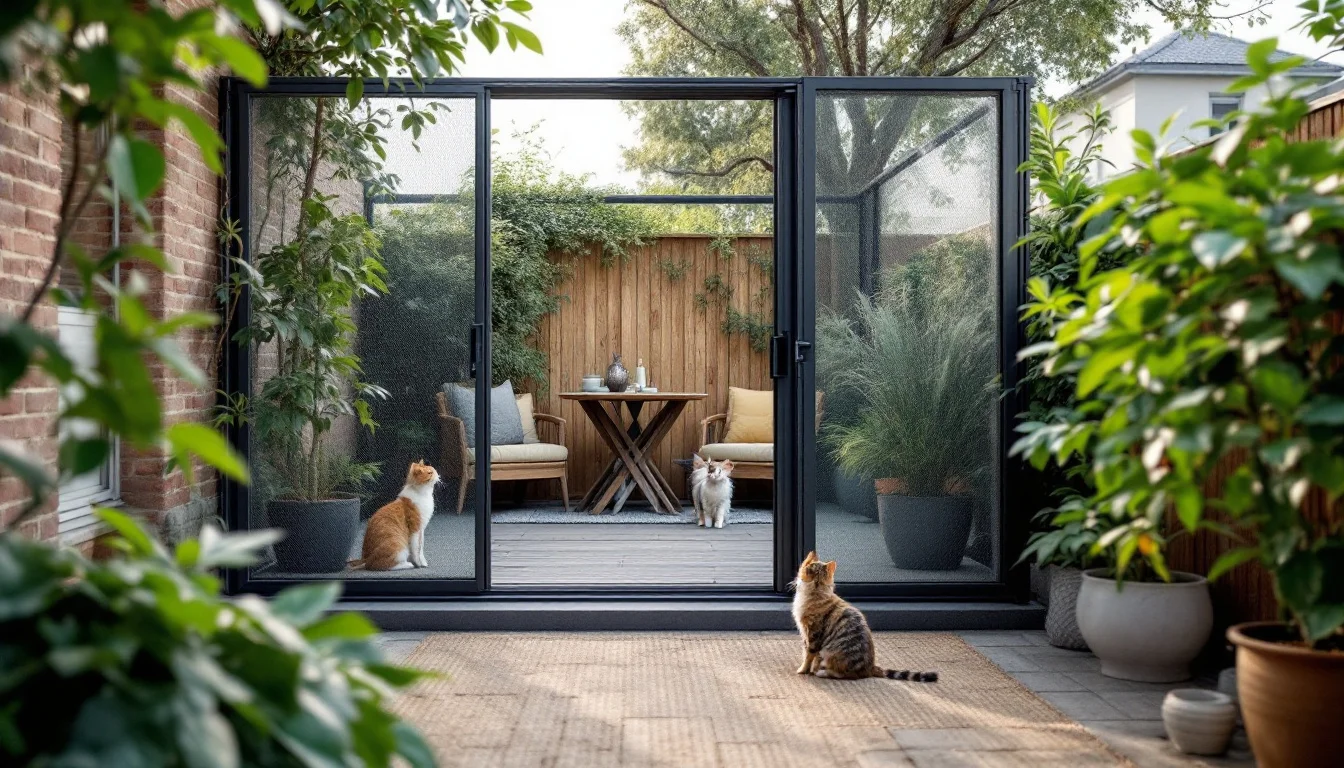
Strict indoor living can frequently lead to under-stimulation, behavioral issues, and physical lethargy if the interior space lacks adequate enrichment. Setting up a dedicated outdoor enclosure—commonly known as a catio—reduces the specific outdoor risks that shorten free-roaming lifespans while providing necessary stimulation.
Key Takeaways:
- Catios protect cats from traffic, predators, and disease while providing safe outdoor enrichment.
- Renters and homeowners have distinct installation options, ranging from renter-friendly window panels to permanent freestanding structures.
- Safe designs require planned access routes, solid-roof weatherproofing, and shaded resting areas.
- Acclimating a cautious cat to a new enclosure should always be gradual and entirely at the cat's pace.
Is a Catio Safe? What Safety Standards and Ecological Data Say
Veterinary Safety Standards
Veterinary professionals recommend keeping domestic cats indoors to protect pets from life-shortening environmental hazards. Unrestricted free-roaming exposes cats to trauma from moving vehicles and encounters with local wildlife predators, such as coyotes. Beyond immediate physical trauma, the outdoor environment introduces exposure to parasites, poisons, and diseases like Feline Immunodeficiency Virus (FIV), which is primarily transmitted through deep bite wounds from infected cats.
Ecological Impact
Conversely, free-roaming domestic cats inflict damage on local wildlife populations and fragile ecosystems when allowed to hunt without restriction. A securely enclosed space entirely eliminates this predatory footprint while still allowing the cat to observe local wildlife safely from a distance.
Structural Enrichment versus Caging
To be effective, the structure must be designed correctly. A true catio is distinctly different from a simple outdoor transport crate or a basic, ground-level pet house. Instead, it is an intricately enriched environment. True structural enrichment incorporates abundant vertical space through the installation of staggered shelves and elevated perches. It also features dedicated scratching zones, comfortable lounging areas, and rigorous physical protection on all sides to prevent escapes and predator intrusions.
Do You Need a Permit or Landlord Approval for a Catio?
Lease Agreements and Renter Approvals
Before finalizing any design or purchasing hardware, builders must clear the logistical and legal hurdles associated with property modification. Renters naturally face strict limitations regarding exterior structural additions. Those living in apartments or rented houses are advised to carefully check their lease agreements before proceeding. It is a critical requirement to obtain written landlord permission before attempting to attach any structural element to the building’s exterior cladding, brickwork, or window frames.
Municipal Permits and Property Setbacks
For homeowners, the physical scale of the intended project dictates the local regulatory requirements. Small, localized installations, such as suspended window box structures or simple porch conversions, are often straightforward enough to fall below the threshold for formal municipal permit requirements—though this varies significantly by municipality and must always be confirmed with the relevant local authority before work begins.
However, larger freestanding garden structures often trigger local zoning laws. Homeowners undertaking large backyard builds must verify whether a building permit is required. They must also ensure the planned structure strictly respects all mandatory property-line setbacks established by the municipality. Furthermore, properties governed by a Homeowners Association (HOA) should check their community rules first, as aesthetic guidelines frequently govern the height, building materials, and visibility of any backyard additions—posing a real risk of HOA rejection. Permit thresholds, setback distances, and HOA rules vary widely by location and jurisdiction; these are general orientation points only and always require direct verification with the relevant local authority before breaking ground.
What Are the Main Catio Configurations?
Analyzing Enclosure Types
When planning a secure enclosure, prospective builders must choose a construction method that fits their housing situation. The spectrum ranges from raw hardware store materials—such as untreated lumber and basic wire mesh—used in purely DIY constructions, to manufactured entry-level prefab kits (such as those offered by the brand Aivituvin) and premium custom-designed modular systems.
For homeowners looking to maximize existing architecture, converting an existing porch or patio heavily depends on framing reinforcement and the quality of the enclosing mesh. Large, freestanding garden catios demand the most substantial structural investment. For those with carpentry skills, DIY large backyard builds can successfully reduce expense by substituting extensive manual labor for the convenience of a kit.
Finally, portable and temporary cat enclosures serve a distinct behavioral and logistical purpose. Sturdy pop-up tents with durable mesh walls, foldable outdoor playpens, and collapsible pet cages provide vital flexibility. These temporary solutions are suited for transient renters, for providing safe outdoor time during travel, or simply for behaviorally testing whether a specific cat actually enjoys enclosed spaces before committing to a permanent build.
Catio Configuration Matrix
| Enclosure Type | Target Audience & Housing | Primary Access Method |
|---|---|---|
| Window Box | Small homes, renters, limited yard space | Always-open window or window-mounted door |
| Porch Conversion | Homeowners with existing covered patios | Cat door in existing human door |
| Freestanding Garden | Homeowners with large yards | Wall-mounted exterior cat door |
| Portable / Pop-up | Travelers, temporary renters, behavioral testing | Manual carry (no structural access) |
As a general rule, renters with a single available window should opt for a window-mounted panel, whereas homeowners with a yard are better suited for a wall-mounted cat door into a freestanding run.
How Do You Handle Access and Weatherproofing?
Routing the Access Point
Indoor-to-catio access must be planned before any building begins, as the chosen route directly impacts structural integrity, home insulation, and feline independence.
Builders can select from the following structural access route options:
- An always-open window fitted with a secure, heavy-duty frame, which is often used for smaller window box catios.
- A wall-mounted cat door cut directly through the exterior wall. This represents a permanent solution, though in climates with cold winters or driving rain, careful insulation and draft-sealing around the frame are essential to maintain the building envelope. The execution of this opening must not compromise the weathertightness or structural integrity of the wall; in cavity or insulated walls, the installer must ensure continuity of any vapor barrier and insulation around the sleeve.
- A window-mounted cat door panel that slides securely into the existing track without modifying the structural wall, serving as a renter-friendly alternative.
- A standard cat door installed directly into an existing exterior door, connecting the indoor living space to a larger converted porch or patio.
Environmental Weather Protection
Once the access route is established, comprehensive weather planning becomes the next critical engineering step. A safe catio cannot be placed in full-day direct sun without adequate engineered shade to prevent dangerous overheating. Builders must integrate a solid-roofed section into the design to provide shelter from intense sun exposure and heavy rain. It is essential to include a weather-protected area that stays dry during severe storms.
Interior Furnishings and Maintenance
Furnishing a completed catio requires installing multiple staggered shelves and adding a dedicated, enclosed hideaway for shaded resting. Essential interior elements include a comfortable weatherproofed bed, a clean water bowl providing continuous fresh water, and easy-clean flooring—such as outdoor carpet or artificial turf—to manage tracked dirt and maintain overall hygiene. This introduces an ongoing maintenance burden for the owner. Furthermore, incorporating a human-sized door and a small seating area in larger freestanding catios allows owners to physically share the outdoor space with their pets and facilitates this routine maintenance.
Will My Cat Use a Catio? Acclimation Strategies
Gradual Space Introduction
Even the most elaborately designed, weatherproofed enclosure can fail completely if the pet permanently rejects the new space; a minority of cats simply never accept an enclosure. Acclimating a cat to a strange outdoor environment requires immense patience, as most felines are instinctively cautious regarding sudden territorial changes.
The behavioral introduction must be executed gradually to establish strictly positive associations. Owners should place favorite treats, regular food bowls, or a familiar bed directly inside the enclosure while leaving the primary access door propped open.
The paramount rule of this behavioral acclimation phase is that the cat must be allowed to explore the space entirely at its own individual pace. The animal should explore without ever being forced, pushed, or carried into the structure. To reduce anxiety and signal that the newly expanded territory is safe, owners can utilize synthetic pheromone sprays, applying them near the entrance and along the primary access routes.
Frequently Asked Questions
Can I install a catio if I rent? Yes, but renters face strict limitations regarding exterior modifications. Temporary pop-up enclosures or window-mounted cat door panels that slide into existing tracks without modifying the wall are the best alternatives. Always secure written landlord permission before attaching anything to the building.
Will my cat actually use a catio? While most cats adapt well to the enrichment, a minority of cats never accept an enclosure. Gradual acclimation using treats and familiar items at the cat's own pace is critical to establishing positive associations.
How do I keep a catio cool in the summer? A safe enclosure must integrate a solid-roofed section to provide adequate engineered shade. It cannot be placed in full-day direct sun without shelter to prevent dangerous overheating.
Conclusion
The transition from free-roaming neighborhood pets to safely enclosed felines represents a significant evolution in modern residential design. As urban density increases and ecological awareness sharpens regarding wildlife preservation, dedicated pet infrastructure is gradually becoming as standard as human outdoor living spaces. Designing a home that accounts for animal biology without compromising native biodiversity raises an open question for future research regarding the long-term welfare benefits of enclosed outdoor access.